










Critical Skill Gaps are often the silent killers of AI and technology investments. You may be investing millions in cutting-edge platforms, cloud infrastructure, or AI pilots, but without the right skills in your workforce, the returns remain frustratingly low. The gap isn’t just technical, it extends to leadership, adaptability, and cultural readiness. And if left unaddressed, these gaps can stall your transformation before it even starts.
I. Why Critical Skill Gaps Are the Hidden ROI Killers?
Think about this: enterprises worldwide are spending over $5 trillion annually on digital transformation (Statista, 2024). Yet, according to McKinsey, companies with strong digital and AI skills outperform laggards by 2–6× in shareholder returns. The reason for this performance divide? Critical Skill Gaps.
- A Robert Half survey found that 44% of organizations say their biggest skills shortages are in AI, machine learning, and data science.
- 45% of leaders admit these gaps directly impede rolling out new technologies this year.
- Beyond tech, the shortage also includes soft skills like adaptability, analytical reasoning, and ethical judgment skills that are essential to make AI and tech work in real-world settings.
The impact is clear: without the right skills, even the most advanced investments struggle to deliver measurable outcomes.
II. Closing Critical Skill Gaps Starts With Upskilling
Closing Critical Skill Gaps isn’t optional anymore. It’s the difference between stalled investments and industry leadership.
- 68% of professionals say upskilling is “extremely important” to closing AI skill gaps (Global Knowledge, 2023).
- Firms that invest in reskilling see faster adoption of Industry 4.0/5.0 technologies and stronger ROI (InfoTech, 2024).
This isn’t just about technical training, it’s about building confidence, resilience, and readiness across the organization. Upskilled employees are not only more capable but also more engaged, driving both business performance and retention.
III. How to Close Critical Skill Gaps?
Here’s a four-step framework you can apply right now:
A. Assess Your Current Critical Skill Gaps
- Run an internal audit using skills assessment tools.
- Track both hard skills (AI, cloud, data) and soft skills (critical thinking, adaptability, leadership).
- Example: Info-Tech’s “Skills Current State & Risk Assessment” is designed to spotlight where the gaps are most urgent.
B. Design Tailored Upskilling & Reskilling Programs
- Create role-specific learning journeys: AI for HR, automation for Finance, cybersecurity for IT.
- Use bootcamps, micro-certifications, or platforms like IBM SkillsBuild or Microsoft Learn.
- Blend internal mentorship and cross-functional training to unlock hidden talent already in your teams.
C. Rethink Hiring Through Competency-Based Models
- Instead of filtering by degrees, focus on demonstrable competencies.
- Deloitte reports employers are increasingly valuing AI fluency and applied skills over formal education.
- Competency-based hiring ensures you attract adaptable, future-ready talent.
D. Build a Culture of Continuous Learning
- Don’t cut training budgets: expand them.
- Encourage managers to role-model learning.
- Recognize and reward employees who apply new skills to business challenges.
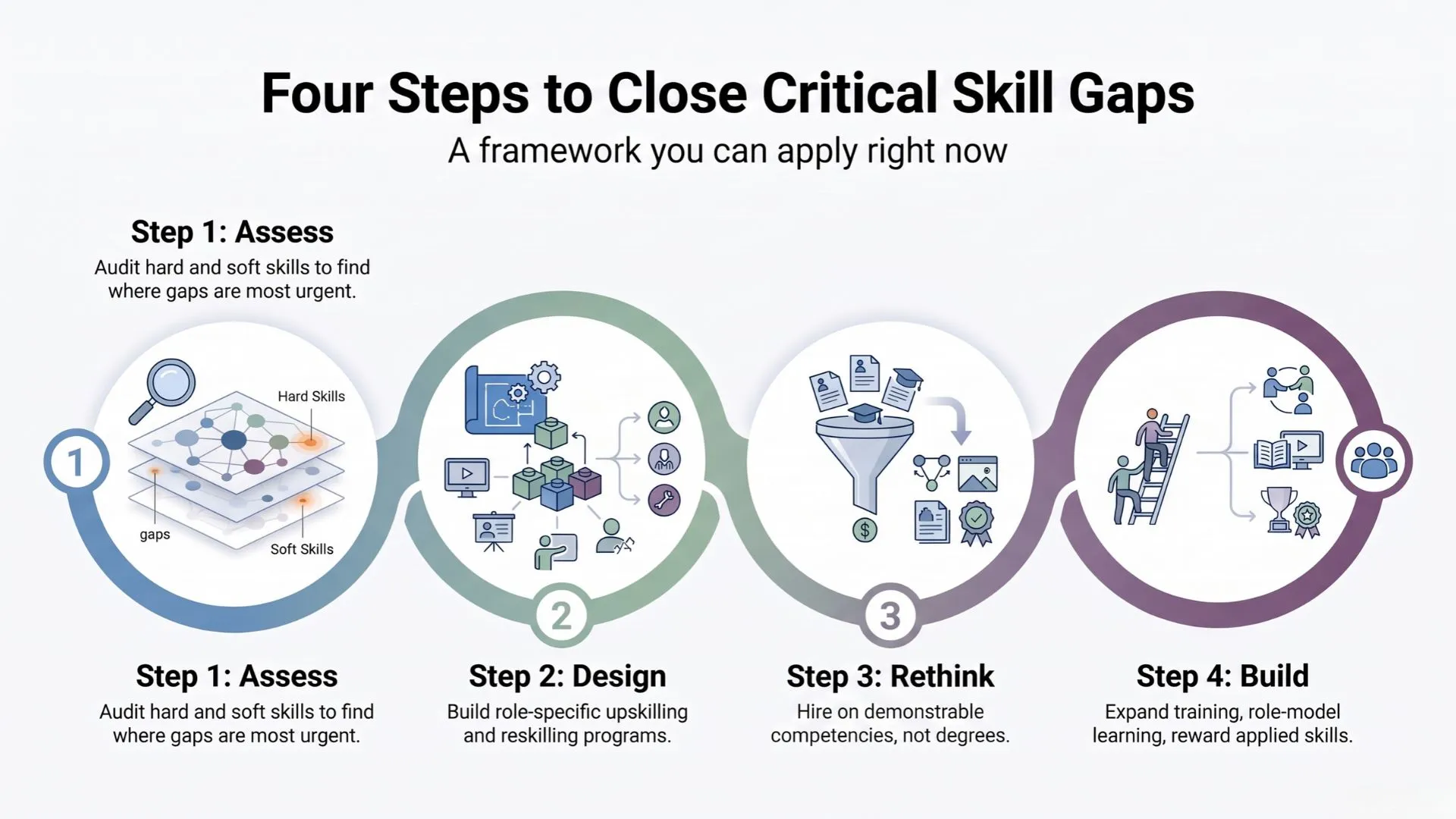
A framework you can apply right now
IV. Why Closing Critical Skill Gaps Matters?
Organizations that actively address Critical Skill Gaps experience:
- Faster adoption of AI and emerging technologies.
- Reduced project failure rates, saving millions in wasted investments.
- Improved employee retention by creating meaningful growth opportunities.
- Higher business impact, with leaders citing measurable gains in productivity and innovation.
In other words, the ROI isn’t just financial, it’s cultural, competitive, and sustainable.
The biggest risk isn’t that your competitors have better technology, it’s that they have better skills. Your AI and tech investments can only deliver value when paired with a workforce that’s ready to use them.
Now is the time to audit your skill landscape, design upskilling strategies, and reframe how you hire and grow talent. Because in the end, closing Critical Skill Gaps isn’t just about technology, it’s about future-proofing your business.
Take action today. Start by assessing your organization’s Critical Skill Gaps and invest in building the skills that matter most.
Finding the gaps is one task. Verifying that they have closed is the one that protects your AI and tech investment.
V. How PeopleBlox Helps?
Assessing skills tells you where the gaps are today. Capability Assurance is the discipline of continuously verifying, not just assessing, that your organization has the capabilities its strategy requires. For AI and tech transformation, that difference decides whether the upskilling you fund is closing the gaps you named.
PeopleBlox is built for that discipline. The Capability Command Center gives CHROs, HR Heads, and business leaders one place to see where capability stands against what each role and initiative requires, so decisions on hiring, reskilling, and deployment rest on evidence rather than recall.
Book a demo to see it live.




read next

Competency Frameworks: What They Are, How They’re Built, and Why Most Fail in Practice

Capability Building: From Course Completion to Business Readiness